Tall and narrow shelves
- Features
- Most relevant
- More sold
- Alphabetically, A-Z
- Alphabetically, Z-A
- Price, lowest to highest
- Price, high to low
- Date: old to recent
- Date: recent to old
Frequently Asked Questions About Tall, Narrow Shelving Units
What are the dimensions of a tall, narrow bookshelf?
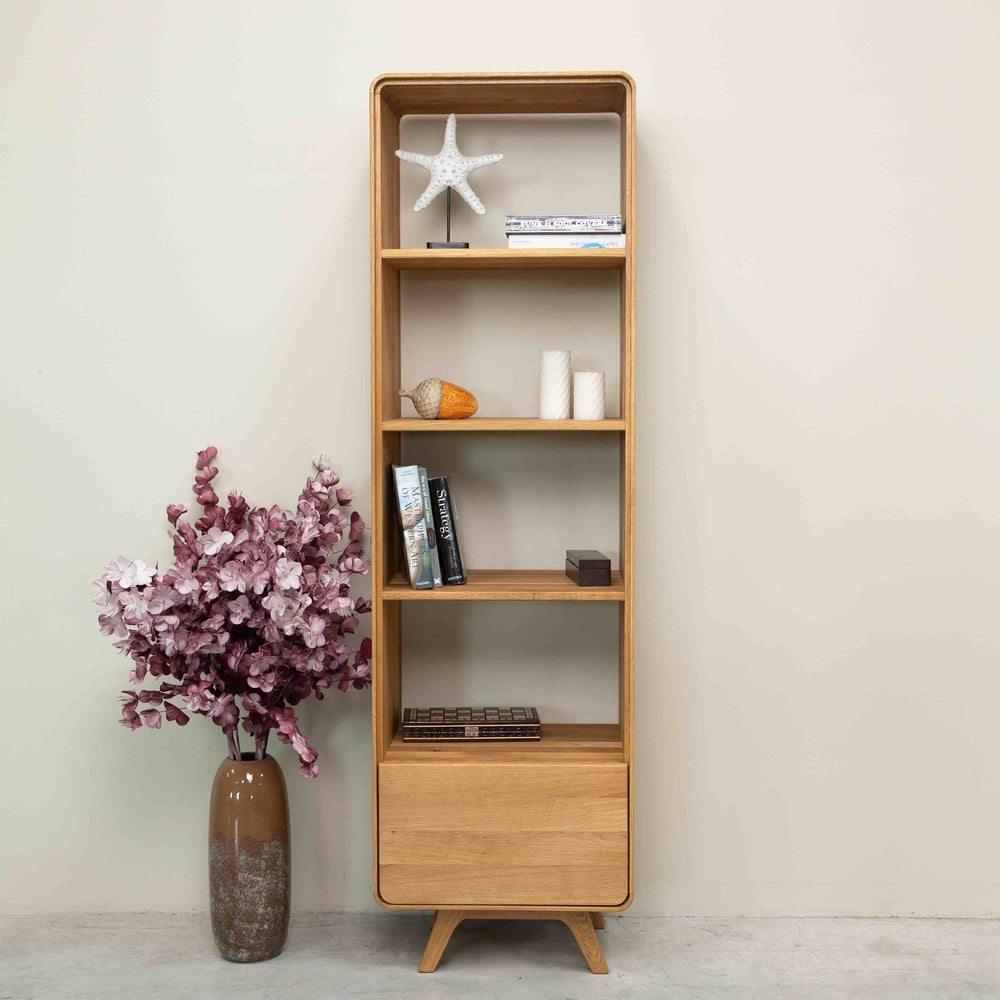
As a general guideline, a bookshelf is considered narrow if it is less than about 80 cm wide, and tall if it is over 180 cm. This design maximizes vertical storage space and leaves the floor clear. Before making your choice, measure the space where the shelf will go, the height to the ceiling, and the clearance you’ll need in front of it. Each product page lists the exact measurements for each model.
Why choose a tall, narrow bookshelf?
Because it makes use of spaces that other pieces of furniture can’t occupy: the side of a door, a corner of the living room, or the short wall of a hallway. You can store just as much as you would in a wide piece of furniture, but it takes up less space, and your home looks more organized. If you’re unsure which style to choose, check out our guide to choosing a bookshelf or bookcase.
Is a tall, narrow bookshelf stable?
Solid oak adds weight and rigidity to the structure, but any tall, narrow piece of furniture should be secured to the wall, especially if there are children in the house. Place the heaviest items on the lower shelves and the lighter ones on the upper shelves. To clean it, simply use a well-wrung damp cloth; avoid harsh cleaning products that could damage the finish.
What goes well with a tall bookshelf in an office?
A matching oak desk creates a complete workspace: the bookshelf holds books, file cabinets, and supplies, keeping the desk clear. The solid wood desks share the same color and grain, so the set looks cohesive even if you buy them separately.
What other narrow pieces of furniture make good use of corners?
If you're looking to gain storage space without taking up floor space, furniture with reduced depth and width works just as well in bedrooms and entryways. Narrow wooden cabinets with doors hide what you don't want on display and fit into spaces where a standard cabinet won't fit.