Posted by Natalia Kolomiets
on October 30, 2026

Published in October 2026
Quick answer: Every year, millions of metric tons of furniture are thrown away worldwide: about 10.8 million metric tons in the European Union—of which 80 to 90 percent is incinerated or ends up in landfills—and nearly 11 million metric tons in the United States. The cause is cheap furniture designed to have a short lifespan and be difficult to repair. The best solution is to buy less often but better: high-quality furniture made of solid wood and well-constructed, which can be repaired rather than replaced.
A shelf that sags, a drawer that comes off its tracks, a tabletop that swells at the first sign of water: more and more pieces of furniture last only a few years before ending up at the recycling center. This is known as “fast furniture,” by analogy with fast fashion, and it has become a global waste problem.
In this article, we review the available statistics by country, explain why so much furniture is thrown away so quickly, and provide specific guidelines for choosing quality furniture that’s built to last—not to end up in the trash.
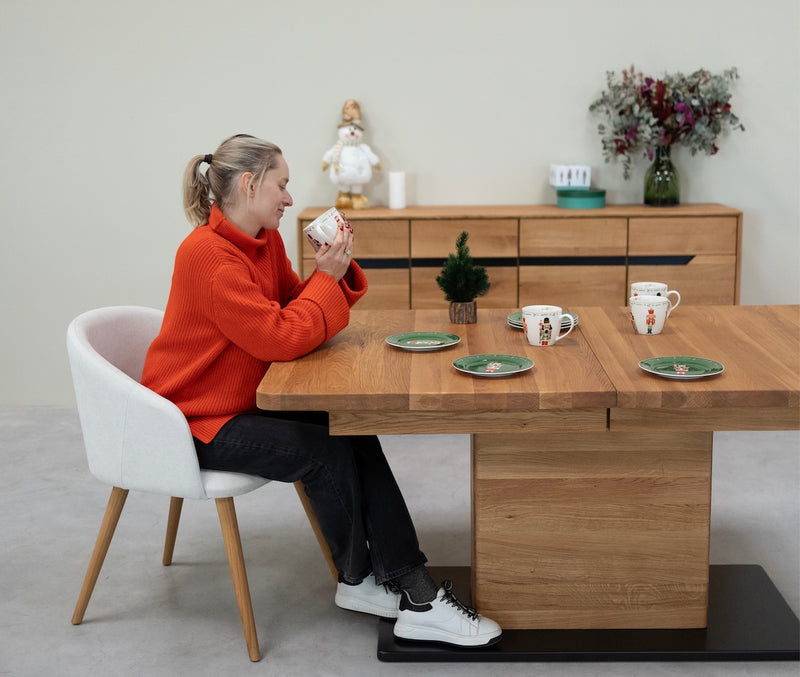
The product shown in the image is the Elsa 6 sideboard from NordicStory, made of solid oak, measuring 140 cm wide, 44 cm deep, and 78.2 cm tall: a piece of furniture designed to last for decades, which can be cared for, repaired, and refinished over the years.
Summary
- European Union: About 10.8 million metric tons of furniture are discarded each year, with 80 to 90 percent incinerated or sent to landfills.
- United States: Nearly 11 million metric tons of furniture were discarded in 2018; 80% ended up in landfills, and less than 1% was recycled.
- Spain generated approximately 955,500 metric tons of bulky waste, such as furniture and mattresses, in 2023.
- Disposable furniture is usually impossible to repair and difficult to recycle.
- The real solution: high-quality, solid-wood furniture that can be repaired instead of replaced.
Contents
- Disposable Furniture: A Global Problem
- How much furniture is thrown away? The figures by country
- Why Is So Much Furniture Thrown Away So Soon?
- Spain and France: How Furniture Is Managed at the End of Its Life Cycle
- Our answer: furniture built to last
- 7 Criteria for Recognizing Quality Furniture
- Quality Furniture at a Good Price: The Cost Per Year of Use
- How to Make Your Furniture Last Longer
- Frequently Asked Questions
Disposable Furniture: A Global Problem
Mass-produced furniture has brought prices down, but it has also shortened its lifespan. Lightweight panels, simple screw-fastened joints, printed finishes: much of this furniture is designed with price in mind, not durability. When it breaks, it isn’t repaired—it’s replaced.
The Financial Times published a report on this topic, “The Hidden Cost of Fast Furniture Waste” (FT Rethink). The report features a waste treatment facility in north London that handles waste from a quarter of the city: according to the report, it receives about 200 metric tons of furniture per week. Also according to the FT, one in four British adults surveyed in 2025 said they replace at least one piece of furniture once a year.
How much furniture is thrown away? The figures by country
There are no consolidated global statistics on furniture waste, but studies available from various countries provide a clear picture of the scale of the problem:
| Country or region | What the Numbers Say | Source |
|---|---|---|
| European Union | About 10.8 million metric tons of furniture waste per year; between 80 and 90 percent is incinerated or sent to landfills, and about 10 percent is recycled | European Environmental Bureau (EEB) and Eunomia, 2017 |
| United States | Nearly 11 million metric tons of furniture were discarded in 2018, with about 8.8 million metric tons sent to landfills (80%); less than 1% was recycled | Environmental Protection Agency (EPA), 2018 data |
| United States, wood | About 16.4 million metric tons of wood were found in household waste in 2018, with 11 million metric tons ending up in landfills; furniture is one of the main sources | EPA, 2018 data |
| United Kingdom | About 22 million pieces of small, damaged furniture are thrown away each year | North London Waste Authority, 2018 survey |
| France | More than 1.7 million metric tons of products collected in 2024 through the dedicated system (furniture, mattresses, home furnishings, DIY, garden supplies, and toys) | Ecomaison, 2024 Results |
| Spain | Approximately 955,500 metric tons of bulky waste (furniture, mattresses, and other household items) generated in 2023 | Ministry for Ecological Transition (MITECO), 2023 Waste Report |
These figures aren't entirely comparable, because each country uses its own measurement methods. But they tell the same story: everywhere, discarded furniture amounts to millions of metric tons, and most of it is neither repaired nor recycled.
Sources: EEB report on the circular economy in the furniture sector, EPA data on durable goods, North London Waste Authority, Ecomaison, MITECO.
Why Is So Much Furniture Thrown Away So Soon?
- Fragile materials: Lightweight particleboard swells when exposed to moisture and breaks when screws are driven into it.
- Joints that cannot be repaired: when a hardware piece tears the board out, there is often nowhere left to screw it back in.
- Finishes that wear out: A scratched or peeling printed finish cannot be restored, unlike wood, which can be sanded down.
- Furniture that follows fashion trends: since it's inexpensive, it's replaced with every new trend or whenever you move.
- A difficult recycling challenge: sofas, foam, and furniture made from a mix of materials are time-consuming and expensive to sort. When there is no established system in place, that cost is borne by the government—in other words, by all of us.
Spain and France: How Furniture Is Managed at the End of Its Life Cycle
In Spain, old furniture is taken to a recycling center or dropped off at the municipal furniture and household goods collection service. Law 7/2022 on waste also provides for the creation of an extended producer responsibility system for furniture and household goods, so that manufacturers and retailers share in the cost of managing them.
France already applies this “polluter pays” model: manufacturers and retailers finance the collection and processing of used furniture through an organization called Ecomaison. In 2024, it had nearly 12,000 collection points, mobilized nearly 400 million euros, and recovered 97% of the collected materials through reuse, recycling, or energy production.
What is the French “éco-participation”? It is a small fee added to the price of every new piece of furniture sold in France and listed separately on the receipt. The amount depends on the type of furniture and helps fund the collection, sorting, reuse, and recycling of used furniture.
Recycling is also making strides in the industry: in the French Ardennes, the Unilin factory in Bazeilles is already recycling MDF panels on an industrial scale using a steam process that separates the wood fibers. According to the FT report, some new boards contain up to 25% recycled fiber. That’s good news, but the furniture that has the least environmental impact is still the kind that doesn’t need to be thrown away.
Our answer: furniture built to last
At Roble.Store , we've chosen something simple: solid oak furniture, designed to last for decades—not to be replaced after just a few years.
- Solid wood throughout its entire thickness: no printed finishes that peel off, just oak that can be sanded and re-oiled.
- Furniture that can be repaired: a scratch, a stain, or a sign of wear can be fixed, rather than taking the furniture to the recycling center.
- A understated design: simple lines that never go out of style, no matter what the latest trends are.
- Focus on the origin of the wood: responsible sourcing and traceability of raw materials, working with manufacturers who use wood from sources managed according to recognized standards, including FSC®.
A piece of furniture that lasts thirty or forty years means a lot of furniture that, in the meantime, isn’t manufactured, shipped, or thrown away. Discover our solid wood dining tables and solid wood cabinets, and read about why you should choose solid oak furniture.
7 Criteria for Recognizing Quality Furniture
Before making a purchase—whether in a store or online—check the furniture using these seven points:
| Criterion | A Mark of Quality | Warning sign |
|---|---|---|
| Material | Solid wood, or thick panel with real wood veneer | Lightweight particleboard with a printed finish |
| Panel Thickness | Thick, rigid board that doesn't warp | A thin board that bends under the weight of the books |
| Joints | Mortise and tenon, dovetail, glued tenons | Only screws, eccentric bolts, and staples |
| Drawers | Rigid side panels and back panel, ball-bearing slides or full-extension slides | Thin cardboard back panel held together with staples; drawer that rubs against it |
| Finish | Oil, wax, or varnish that protect wood | Decorative film that peels off at the edges |
| Stability | The piece of furniture doesn't move when you push it | It wobbles or creaks from day one |
| Repairability and Warranty | Sand it down, re-oil it; clear parts and warranty | Unrepairable, limited warranty |
Be sure to check out the back and the bottom as well: a thin backing that’s simply stapled on or poorly finished edges say more than the front does. If you’re unsure which material to choose, check out our comparison of MDF vs. solid wood.
Quality Furniture at a Good Price: The Cost Per Year of Use
To compare two pieces of furniture, divide their price by the number of years you'll actually use them. Here's a simple example, just for reference:
| Economic Roundtable | Solid Wood Table | |
|---|---|---|
| Purchase price | 150 € | 1.200 € |
| Years of use | 4 years, and then it changes | 40 years or more, with maintenance |
| Shopping Over the Past 40 Years | 10 tables, or 1,500 € | 1 table, or €1,200 |
| Annual Cost | 37,50 € | 30 € or less |
These figures are just an example, not a rule. But they show that a piece of furniture that’s more expensive upfront can end up being cheaper over time—not to mention the shipping, assembly, and trips to the recycling center that you’ll save yourself.
How to Make Your Furniture Last Longer
- Caring for them: dust them off, wipe them down with a slightly damp cloth, and treat the wood once or twice a year. All the tips on how to care for solid oak furniture.
- Restore Instead of Replacing: Sanding and a fresh finish can breathe new life into a dull piece of furniture. See how to restore a wooden table.
- Choose the right finish: a good oil or varnish extends the life of any wood. We'll tell you all about it in our guide to types of wood finishes.
Frequently Asked Questions
How much furniture is thrown away each year in Europe?
According to a study by the European Environmental Bureau (EEB) and Eunomia, approximately 10.8 million metric tons of furniture are discarded each year in the European Union, of which 80 to 90 percent is incinerated or ends up in landfills.
What is fast furniture?
This furniture is inexpensive, mass-produced, and designed to be affordable rather than durable. Since it is difficult to repair, it is usually replaced after just a few years.
How can you tell if a piece of furniture is of good quality?
Check the materials, the thickness of the board, the joints, the sturdiness of the drawers and their slides, the finish, the stability, and whether it can be repaired. The back and bottom of the piece of furniture are often very revealing.
Where can I dispose of old furniture in Spain?
At your local recycling center or through the municipal furniture and household goods pickup service. If it’s in good condition, you can also donate it or sell it so it can have a second life.
Does solid wood furniture last longer?
Yes, if it's well-made and properly cared for: solid wood withstands wear and tear better and, above all, can be sanded down and repaired, allowing it to last for decades.
Is it possible to find quality furniture at a good price?
Yes, if you consider the cost per year of use and not just the purchase price. A piece of furniture that lasts for decades is usually cheaper than several inexpensive pieces that need to be replaced.
Solid oak furniture built to last
Solid wood tables, sideboards, dressers, and cabinets built to last a lifetime.
Tags:
How to Choose,
Solid Wood